
From fruit to a bottle of oil
A bottle of oil begins with camellia seeds. Harvesting, drying and sorting are followed by crushing, steaming, cake forming and physical pressing.
From a seed to a drop of oil
Planting, tending, harvesting and oil making: four stages trace the journey to a bottle of camellia oil.
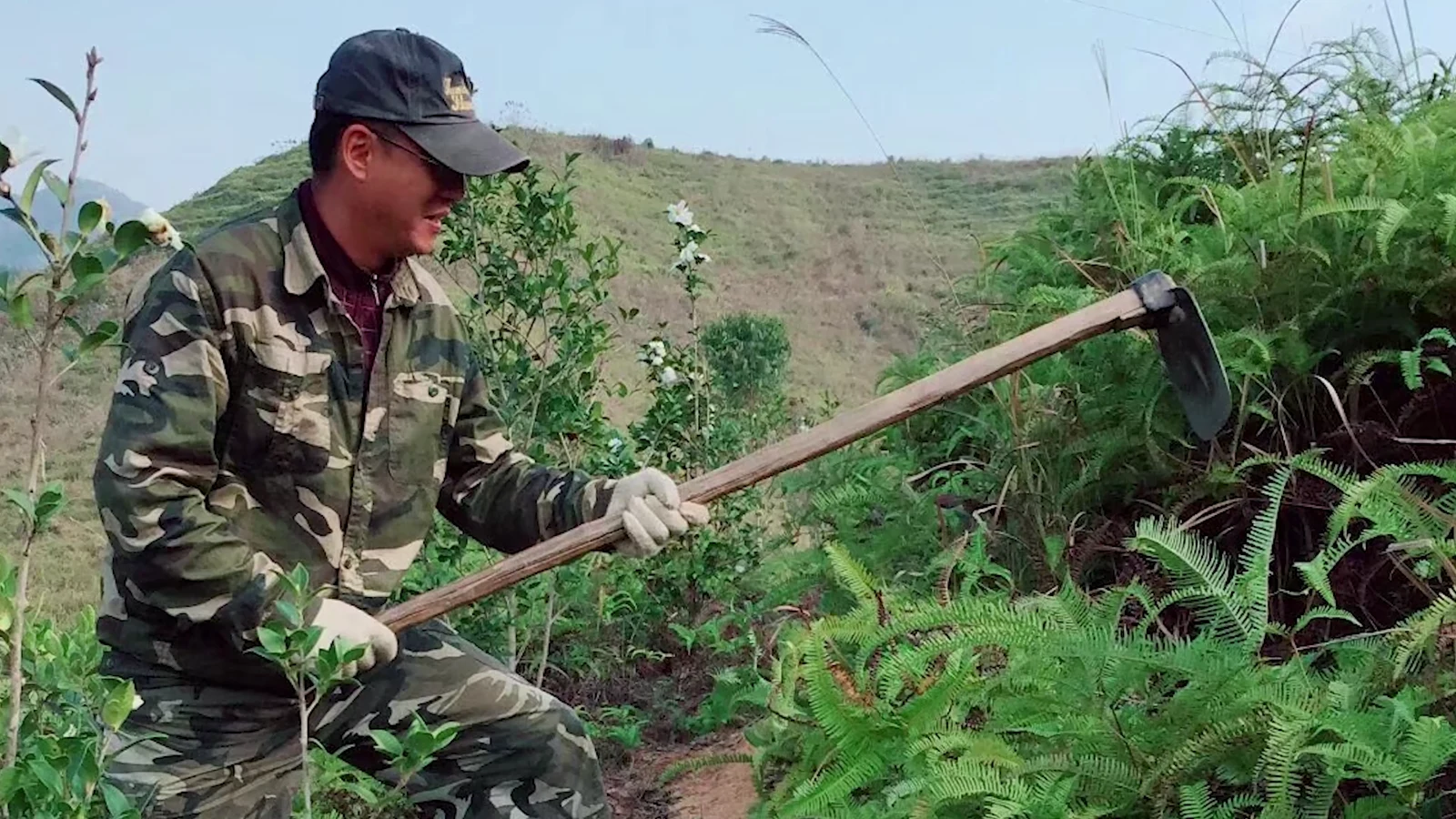
Planting and care
Planting trees, composting, weeding, tending with enzyme preparations and playing music are part of the grove’s daily story.
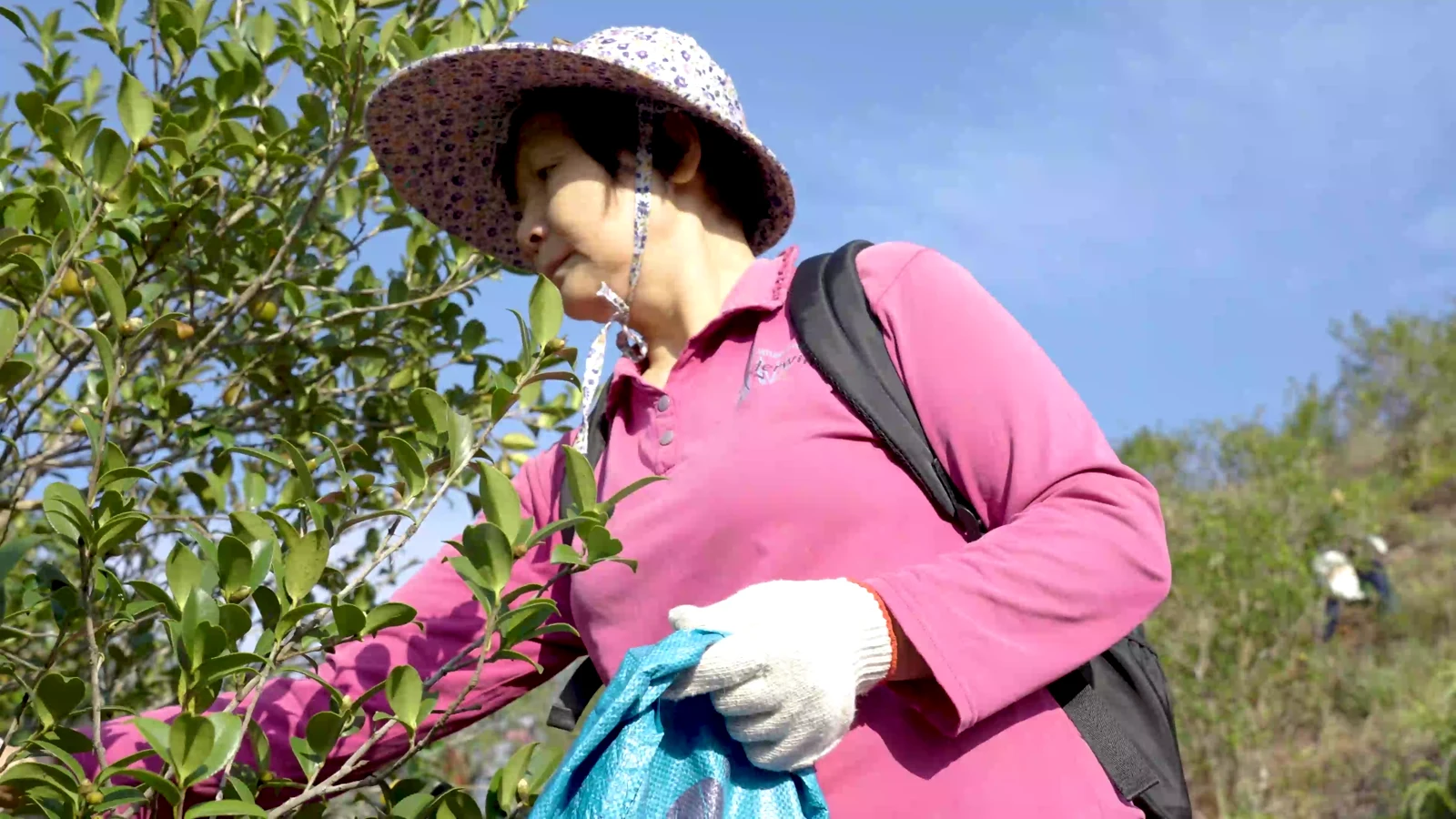
Fruit and harvest
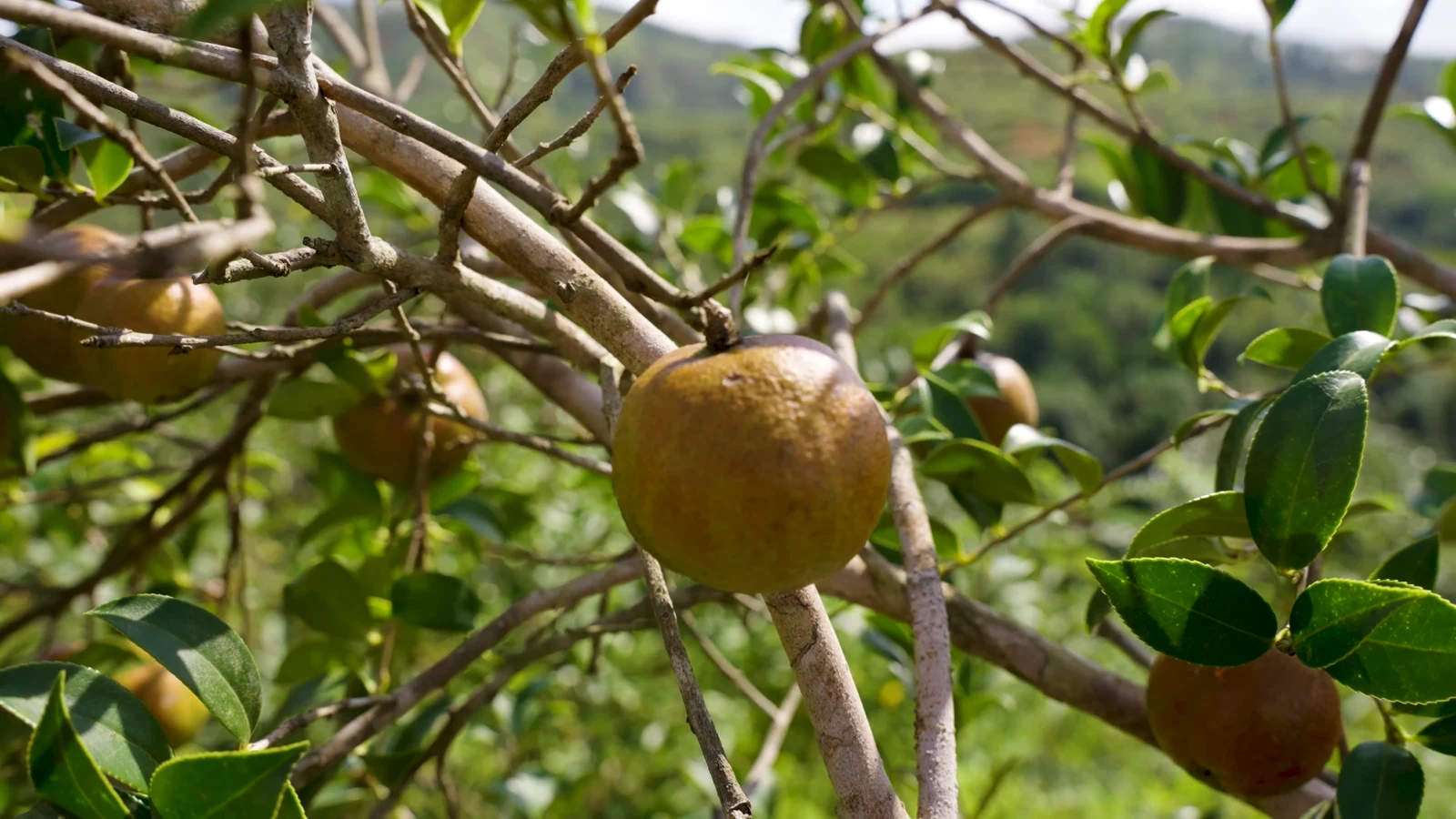
Fruit grows on the branches. After harvesting, the camellia fruit moves to the next part of oil making.
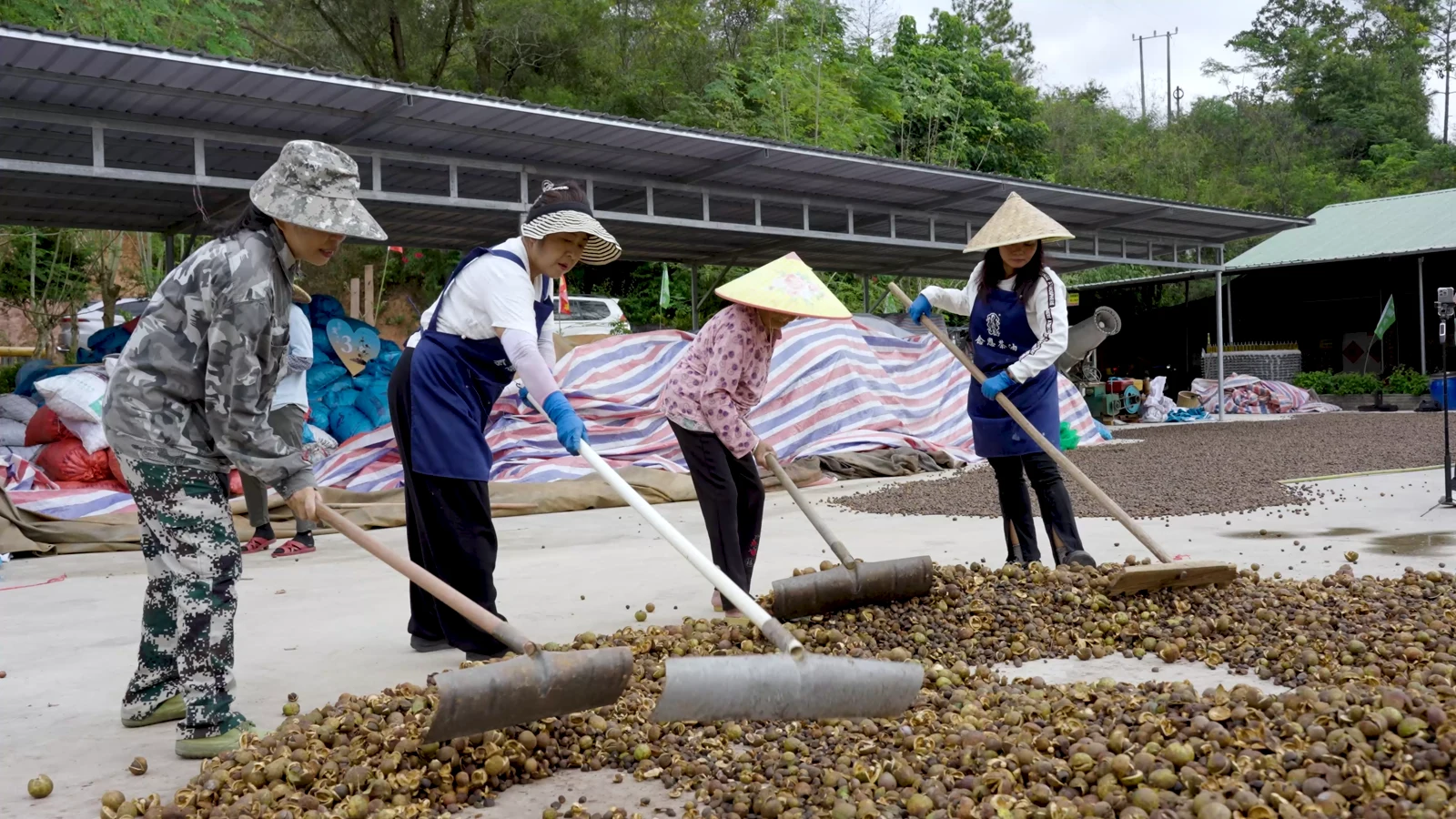
Drying and sorting
The fruit is dried, the shells separated and the seeds selected in preparation for processing.
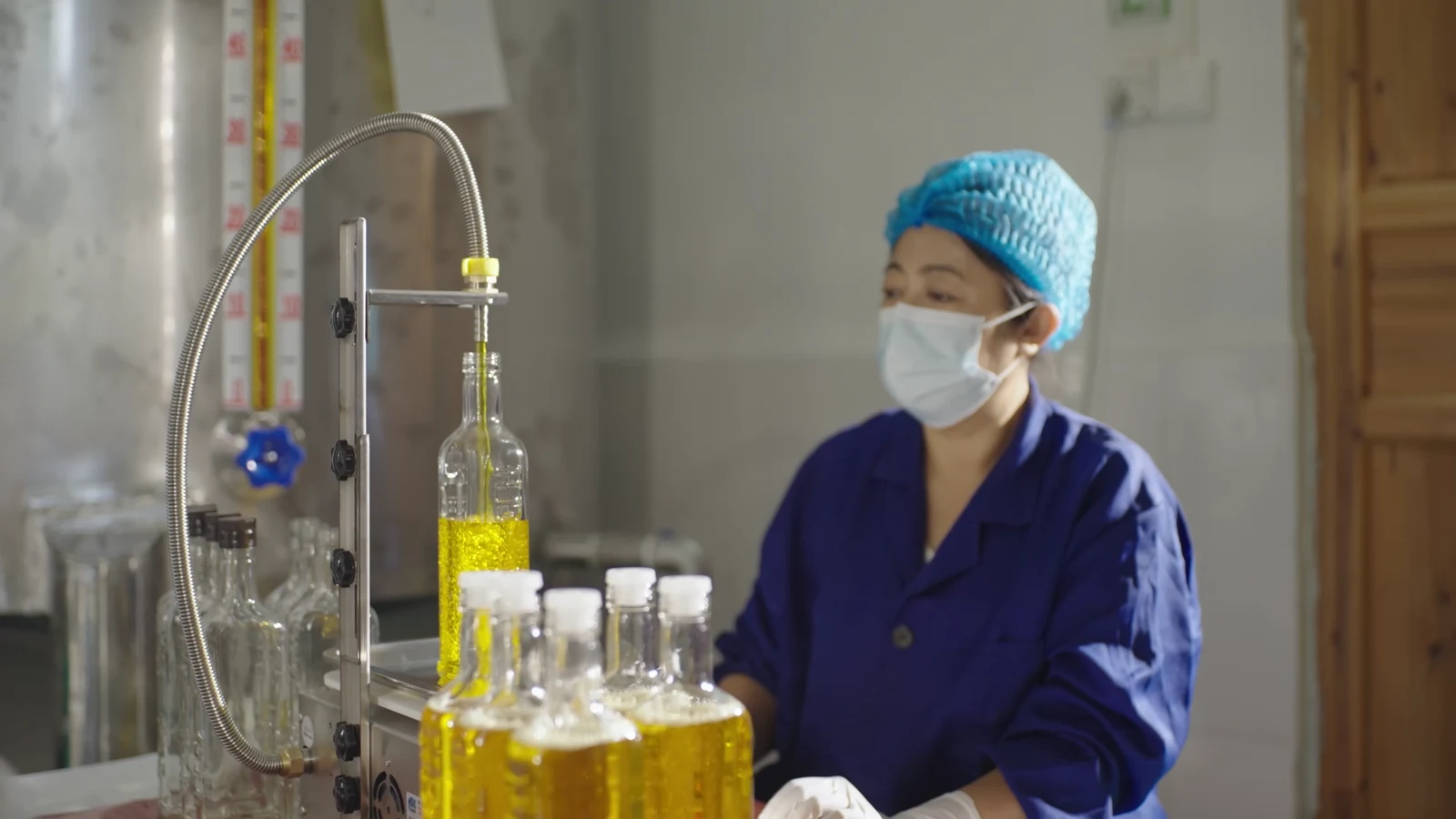
Pressing and bottling
Grinding, steaming and forming cakes lead to mechanical pressing, followed by bottling and packaging.
Harvesting
We begin harvesting after the Frost’s Descent solar term, allowing the fruit more time on the trees. Ripe fruit is picked and moves on to drying and sorting.
Resting, drying and sorting
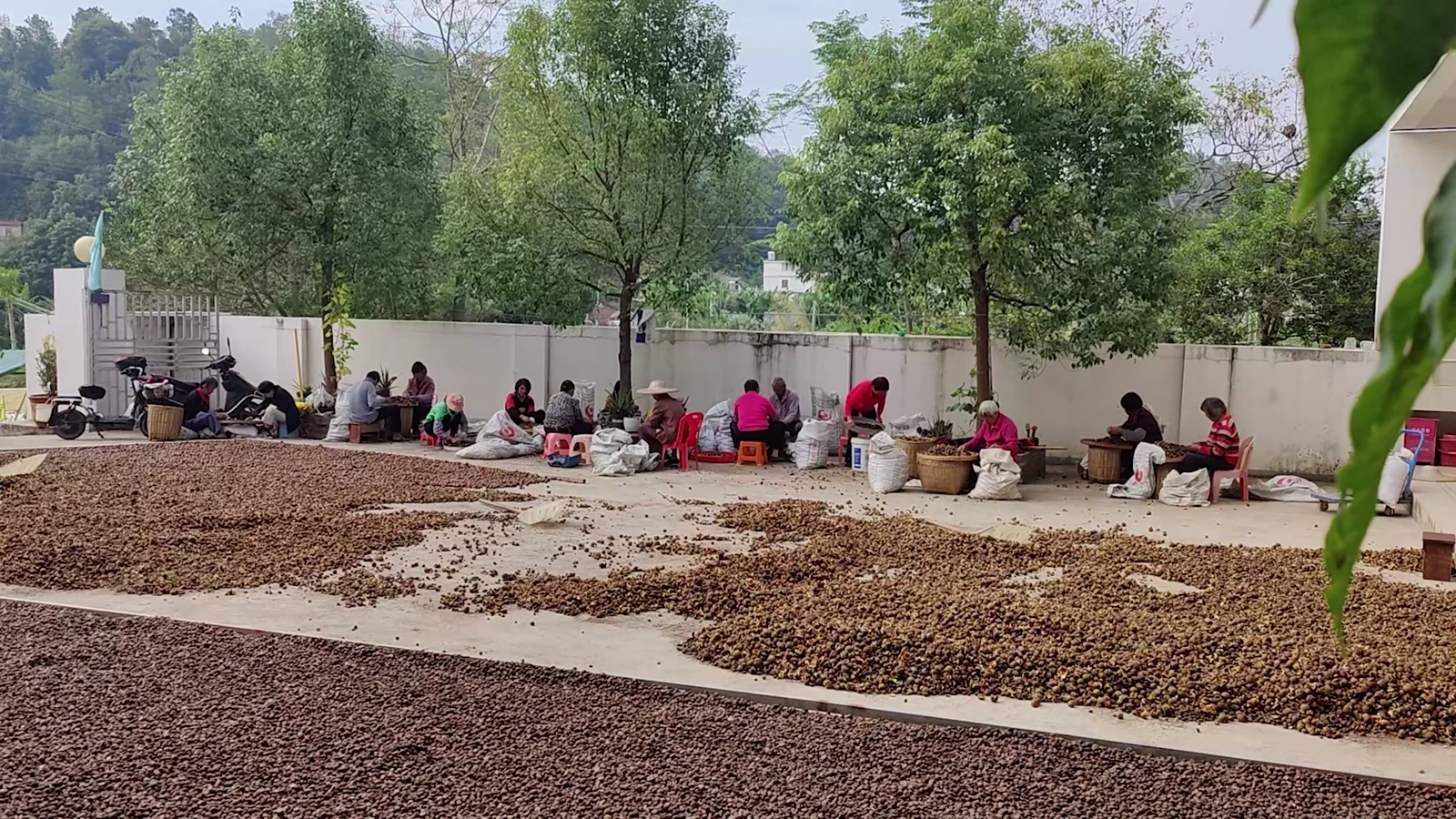
The fruit rests until its shells open naturally, then dries in the sun. Local workers separate the seeds and dry them further before storage in a cool, ventilated place.
Grinding, steaming and forming cakes
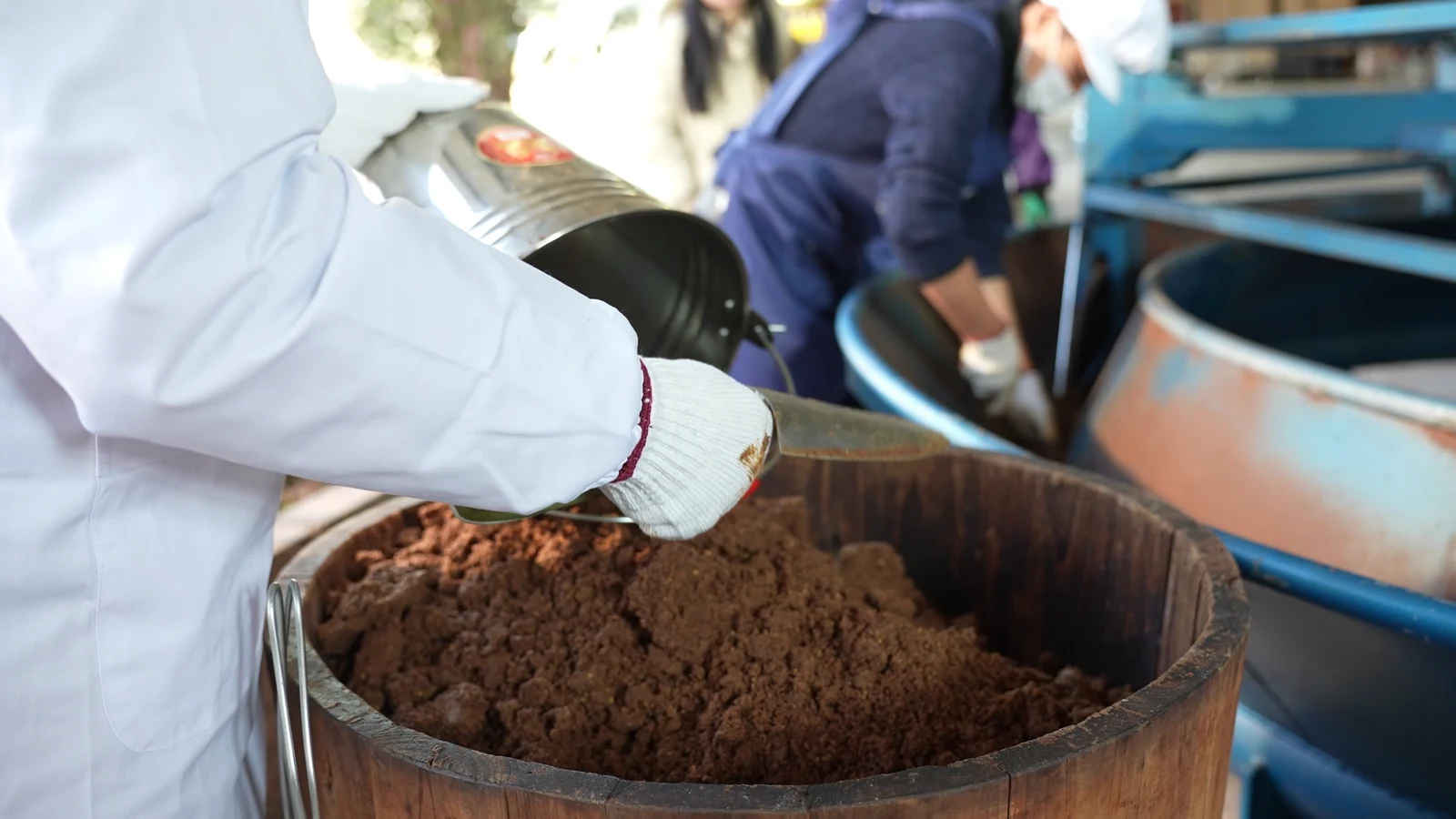
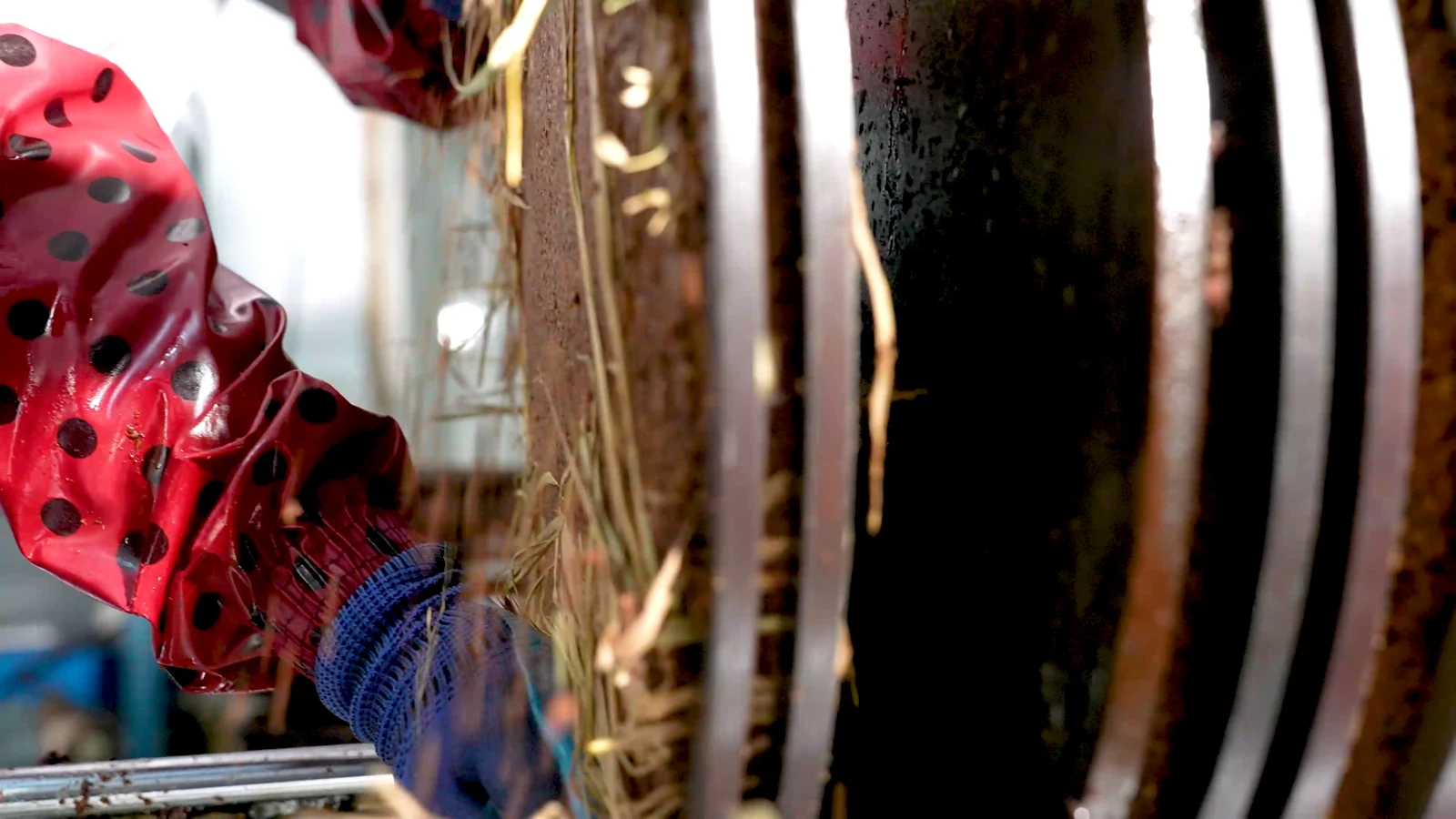
Stored seeds are sorted and checked again, crushed and steamed in a wood-fired pot. After moisture disperses, straw is used to form cakes for pressing.
Pressing and bottling
The cakes are physically pressed; the oil is then bottled and packaged. Skilled hands and familiar tools carry traditional oil making into daily work.
Video Transcript
At first, I knew very little about camellia oil. Someone in the county was working on investment promotion. I asked him, "What is camellia oil?" It made me think: we may live for a hundred years, but we can leave a grove for generations to come. That was something else I wanted to do. In 2009, we began clearing the hillside. We started planting in early 2010. After planting, weeds covered the young trees. My intention was to protect this soil. So I kept to weeding by hand. After two years, those shareholders stopped. They told me to carry on by myself. I kept going, making sure the weeds would not overtake the trees. We also use a preparation called "jiaosu" on the soil. Each year, we spray "jiaosu" across the hillside. Another part of how I care for the grove: I play music for the trees. Weeding by hand, applying "jiaosu", and playing music for the camellia trees. These are the things we focus on in the grove. We harvest within five days before or after Frost's Descent. That is our prime harvest window. We want the fruit to stay on the trees a little longer. So I begin harvesting after Frost's Descent. I hope to give the seeds more time on the tree to take in more nutrients. The harvested fruit is first piled in a shaded place. We leave it there for five days. The fruit shells split open. Three to five days after the shells split, we spread the fruit out in the sun. After another three days in the sun, the shells have opened up. People from the local community help us sort the camellia seeds. The sorted seeds are spread out in the sun again. We dry them for another three to five days, until they are thoroughly dry. Once dry, we store them in a cool, well-ventilated place for two months. After two months in storage, we prepare the material again. We check the seeds for mold. For pressing, we use a traditional method. A grinder runs very fast, and that can change the seeds. After grinding, the seeds are steamed. We steam the seeds over a wood fire. After steaming, we let the seeds cool down. Once the moisture has dried off, we can form the seed cakes for pressing. We use rice straw for these pressing cakes. We then press the seed cakes mechanically. That is our oil-making process from start to finish. I said, "This is what I want to do."