
Camellia oil, from grove to everyday life
From early records of oil-bearing seeds to meals and personal care, explore camellia through history, nutrition, craft, cooking, wider uses and traditional medicinal records.
A tradition of camellia oil
Camellia oil is a traditional plant-based cooking oil in southern China. The seed connects the grove with generations of food-making experience.
Tiangong Kaiwu, first published in 1637, records tea seeds among edible oil materials in its chapter on oils. In December 2018, Longchuan’s traditional oil-pressing technique was listed as municipal intangible cultural heritage in Heyuan. These records bring together food culture and local craft.
Nutrition and everyday value
Camellia seed oil is generally rich in oleic acid, a monounsaturated fatty acid. In a balanced diet, plant-based unsaturated fats can replace some saturated fat.
Vitamin E has antioxidant activity. The choice of oil, the amount used and the variety of foods all matter. Vitamin E, squalene and total triterpene test results are available on the Quality page.
References
From fruit to a drop of oil
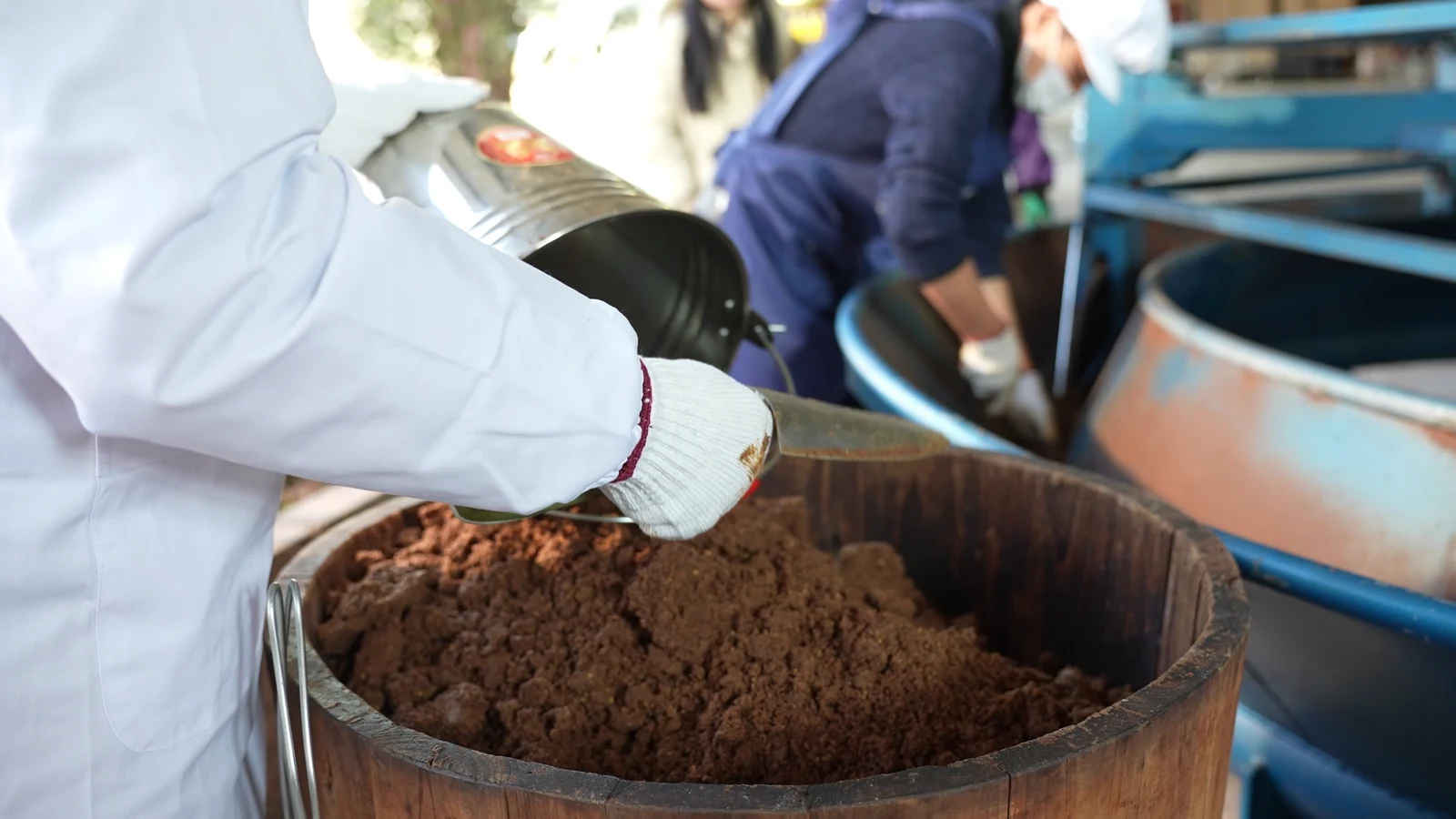
Trees are planted and tended until the fruit matures. Harvesting leads to drying and sorting, then grinding, steaming, cake forming, pressing and bottling. Follow four stages to see the work behind a bottle of oil.
Our CraftPlanting and care
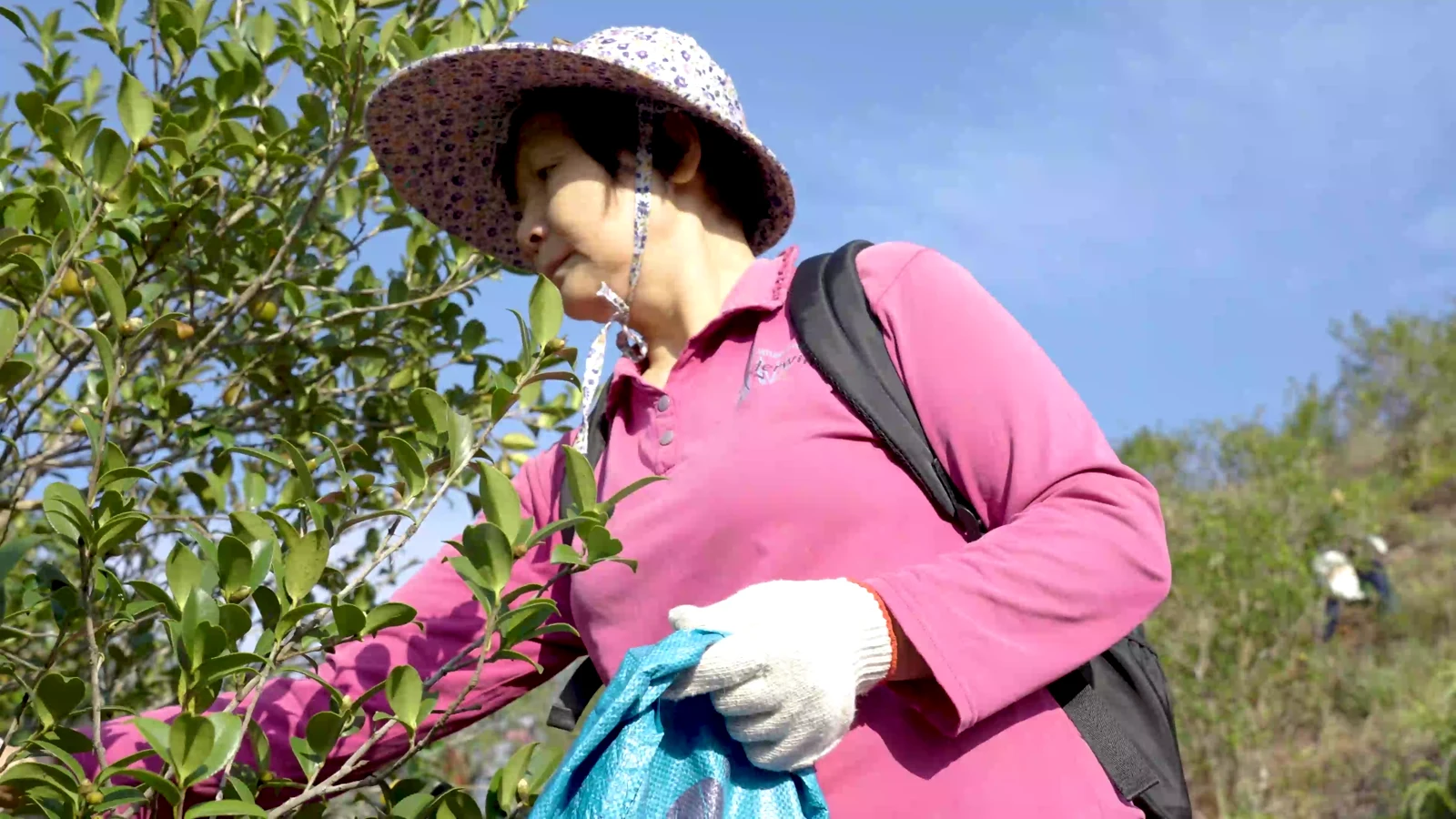
Planting trees, composting, weeding, tending with enzyme preparations and playing music are part of the grove’s daily story.
Fruit and harvest
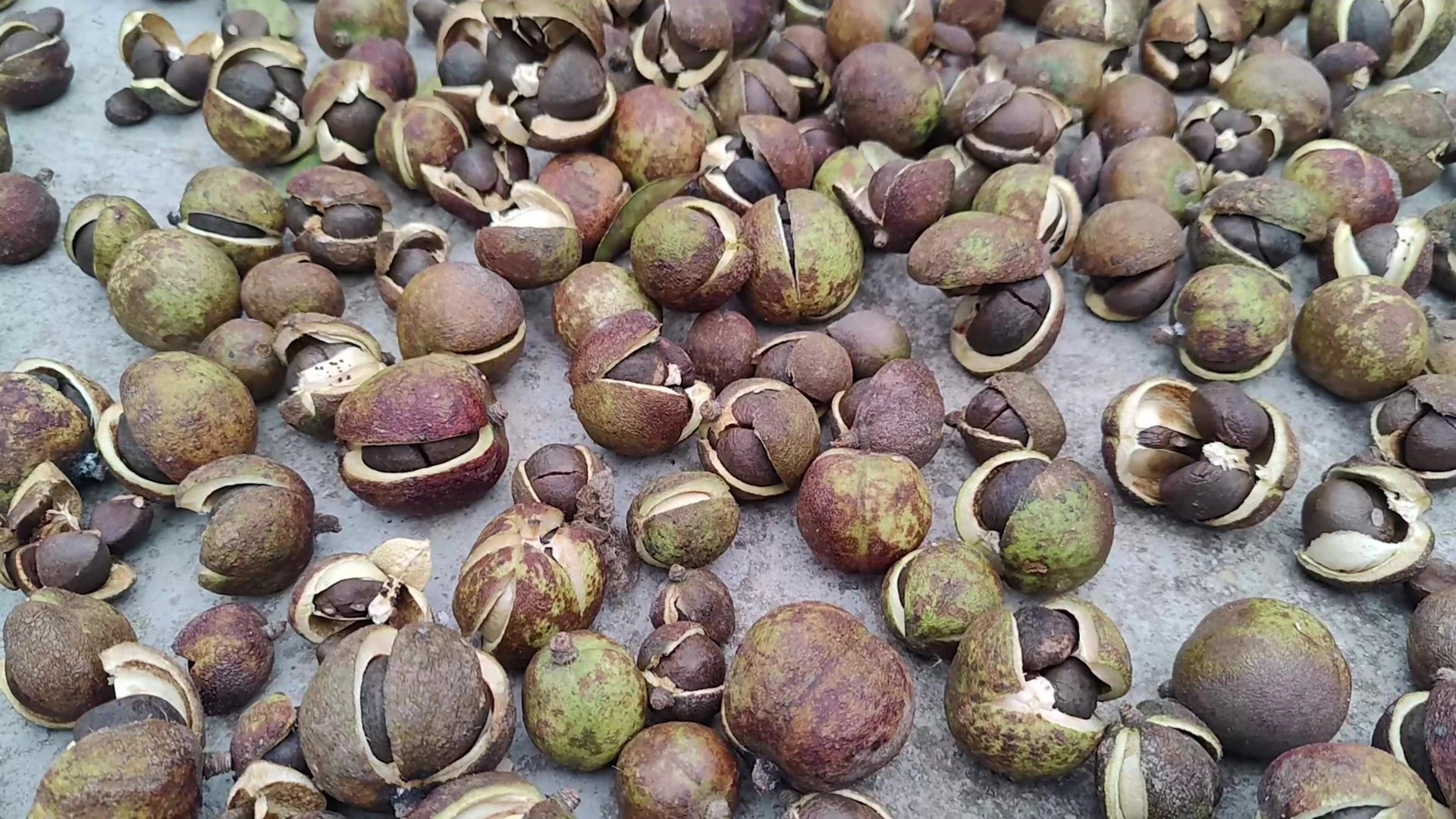
Fruit grows on the branches. After harvesting, the camellia fruit moves to the next part of oil making.
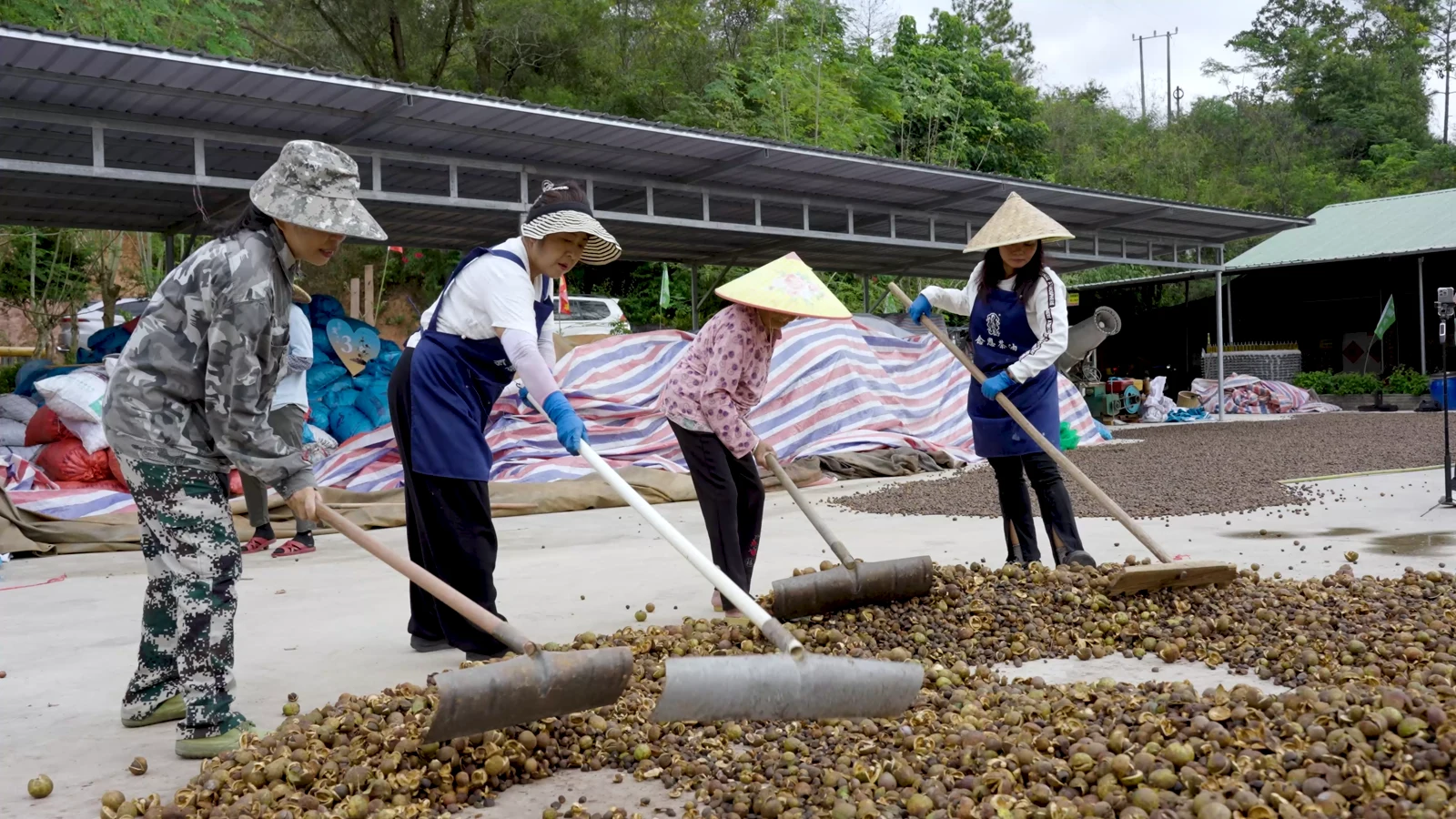
Drying and sorting
The fruit is dried, the shells separated and the seeds selected in preparation for processing.
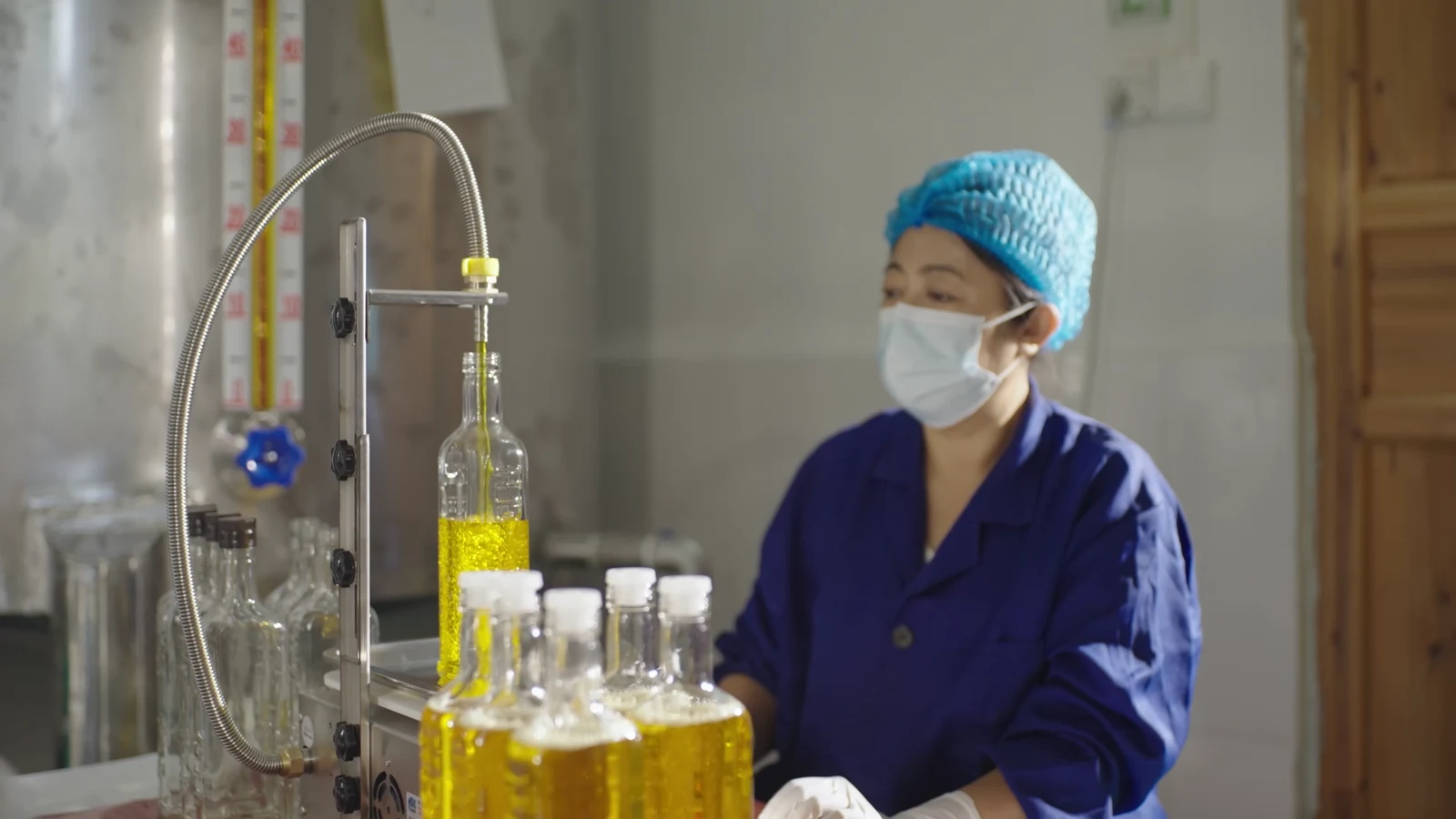
Pressing and bottling
Grinding, steaming and forming cakes lead to mechanical pressing, followed by bottling and packaging.

Using oil day to day
A steamed dish, a bowl of soup or a family meal offers a practical way to get to know camellia oil. Measure before pouring and choose cooking methods suited to the product label.
For adults, the recommended total of all cooking oils is 25–30 grams per day. Vary oil types, favour steaming and boiling, and use less frying. Close the cap, store in a cool, dark, dry and ventilated place away from heat, and follow the label’s shelf-life and opening instructions.
Journal Article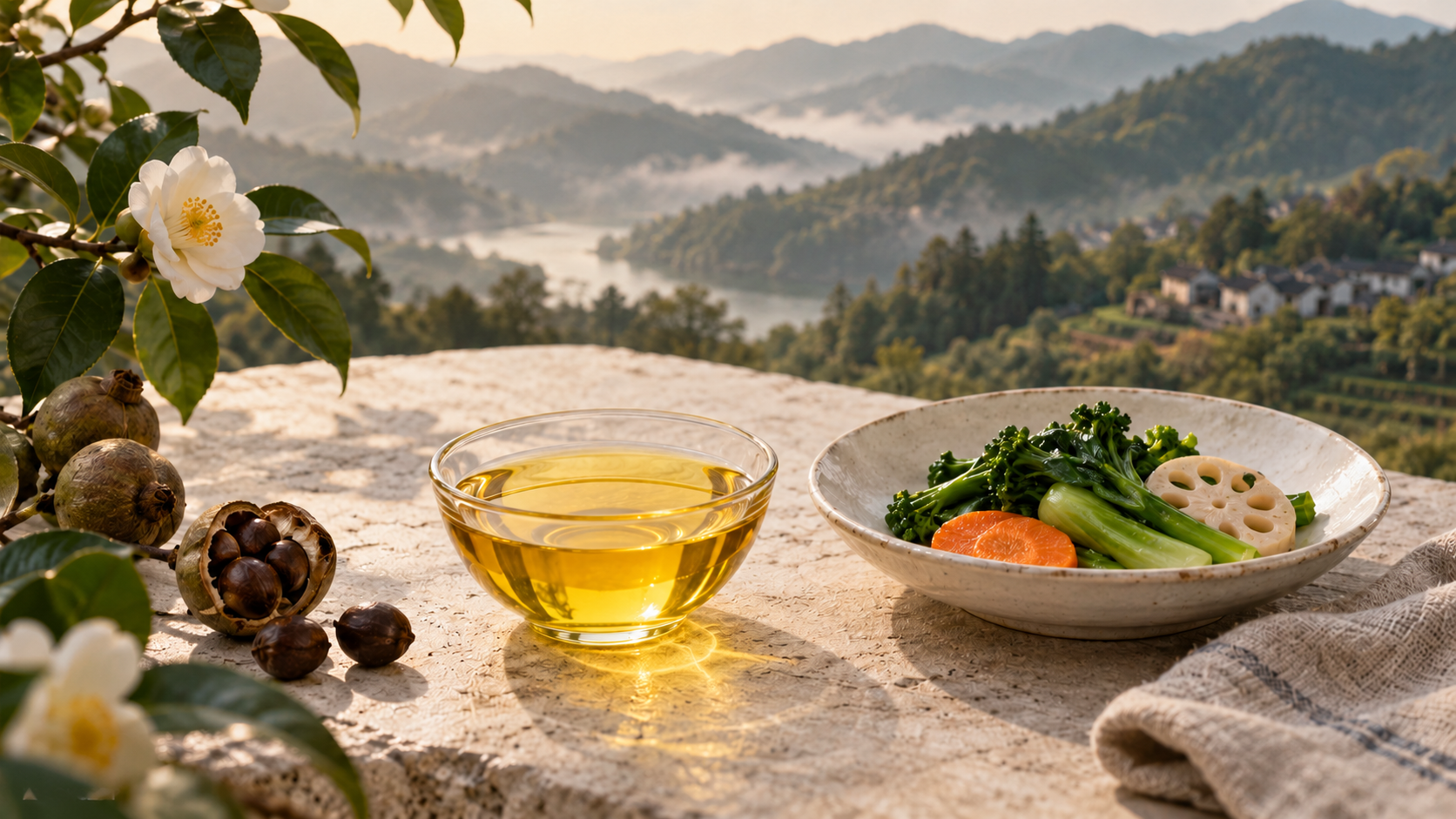
Everyday uses beyond food
Camellia seed oil can be used as an emollient and skin-conditioning ingredient in skincare formulations, supporting a soft, moisturised feel. It is also used in hair-care formulations.
After pressing, camellia seed cake still has uses. Tea saponins extracted from the cake have cleansing, foaming and emulsifying properties for cleaning, shampoo and other household products.
References
Traditional medicinal records and anti-inflammatory research
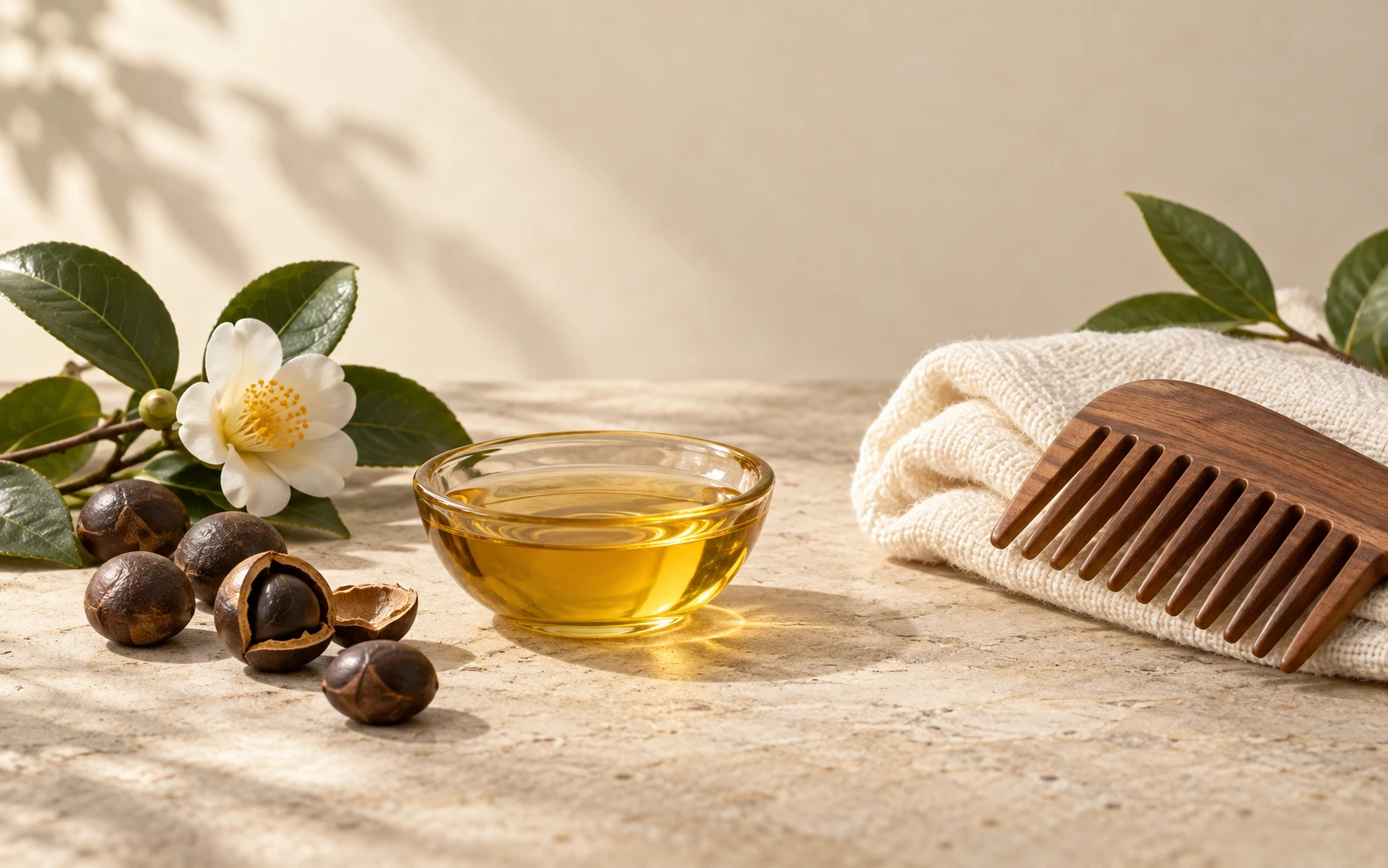
Traditional uses of tea oil include skin and hair care, and soothing skin after insect bites.
The inflammation-related activity of camellia-oil ingredients is also studied for care formulations. A 2024 in-vitro experiment found that pressed camellia seed oil and oil-containing emulsions reduced inflammation-related nitric oxide production in mouse macrophages. The study used a cell model.
Understanding camellia oil
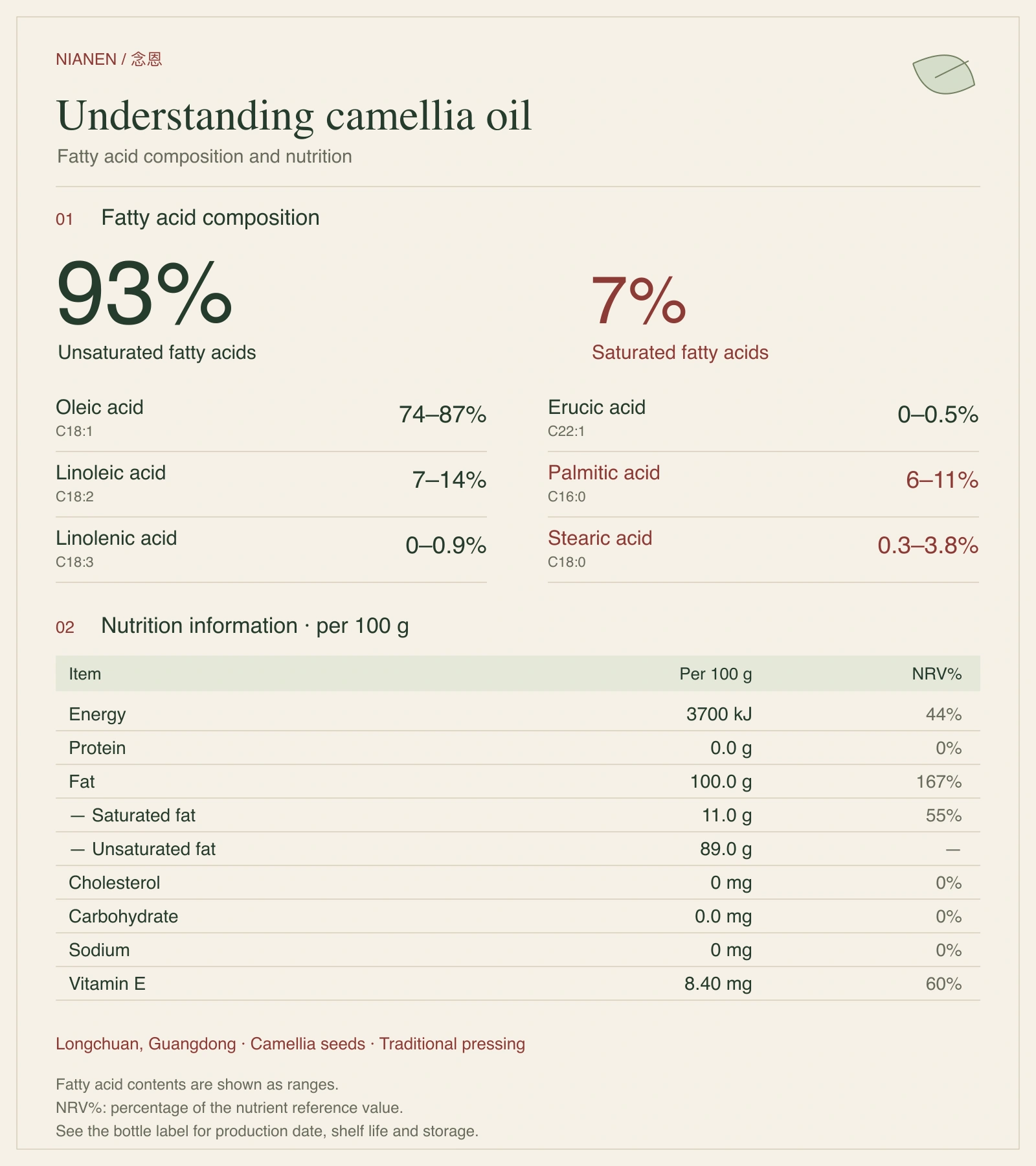
Oleic acid is a monounsaturated fatty acid and the main fatty acid in camellia oil. The table lists six fatty acids with their notations and content ranges.
References
| Fatty acid | Notation | Listed range |
|---|---|---|
| Oleic acid | C18:1 | 74–87% |
| Linoleic acid | C18:2 | 7–14% |
| Linolenic acid | C18:3 | 0–0.9% |
| Erucic acid | C22:1 | 0–0.5% |
| Palmitic acid | C16:0 | 6–11% |
| Stearic acid | C18:0 | 0.3–3.8% |
Latest articles
Reviewed articles will appear here.